
Plan a Skardu trip that still works when the flight cancels or the road closes — verified routes, honest drive times and real costs.
Skardu at a glance
Skardu is the main town of Baltistan in Gilgit-Baltistan, at about 2,228 metres where the Indus and Shigar rivers meet. This skardu travel guide gives you the complete plan: fly in about one hour from Islamabad or allow two full days by road, come between May and October (mid-June to September for Deosai), allow 5–7 days, and know that no permit is needed for the open valleys.
- Where: Skardu District, Baltistan Division, Gilgit-Baltistan
- Elevation: ~2,228 m
- By air: ~45–60 minutes from Islamabad (weather permitting)
- By road: two days — never plan it as one
- Best months: May–October; September is the best single month
- Deosai season: mid-June to end-September, most reliable
- Days needed: 5–7
- Permit: none for Skardu, Shigar, Khaplu or Deosai
Who is this guide for?
This guide is written for a first-time Skardu visitor planning independently — whether you are a Pakistani traveller making your first Baltistan trip or an international visitor who knows Hunza but has never done Baltistan’s logistics. By the end you will have a bookable plan: your route chosen with a fallback, your days ordered so altitude does not ruin them, and your budget set in real Pakistani rupee ranges. Every route, season and cost here was checked in November 2026, and anything time-sensitive is flagged so you can re-check it before you travel.
Two honest warnings before anything else. First, the road journey is long — two days, not one, whichever route you take. Second, Skardu’s flights are famously weather-dependent, in every season. Neither is a reason not to go; both are reasons to plan the way this guide sets out.
Where is Skardu, and why does everything start here?
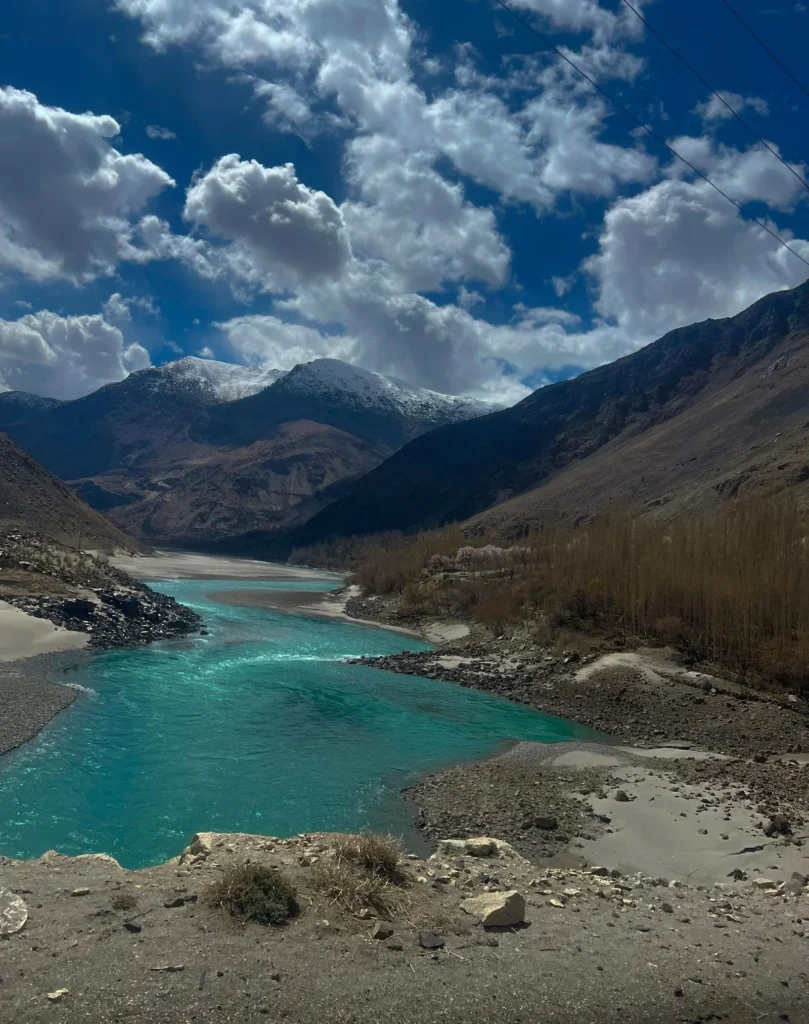
Skardu sits at the confluence of the Indus River and the Shigar River, ringed by the Karakoram Range. It is the gateway town for the great Baltistan expeditions — K2, Broad Peak and the Gasherbrum peaks are all approached through here, and the Baltoro Glacier treks stage from Skardu — but you do not need to be a mountaineer to use it. Those expeditions run on Baltistan’s porters, and the most famous of them all is Ali Sadpara, whose story we tell in full. From one base in town you can reach cold deserts, two famous lakes, a 17th-century fort, the palace town of Khaplu and the Deosai plateau, the second-highest plateau in the world.
The culture is part of the draw. Baltistan’s roots are Tibetan: the Balti language is a Tibetan language, and the food, architecture and apricot orchards all carry that heritage. One myth to clear up immediately, because it shapes expectations: K2 is not visible from Skardu town. Seeing it means a multi-day Baltoro trek toward Concordia. What Skardu town does give you is Nanga Parbat views from Deosai’s Sheosar Lake on a clear day, and some of the finest mountain scenery in Pakistan without a trekking permit.
What should you prepare before you go?
Documents. Pakistani travellers need nothing special. Foreign visitors need a valid Pakistan visa; no separate permit is required for Skardu, Shigar, Khaplu or Deosai. Permits only enter the picture for restricted-zone trekking and mountaineering, which are issued by the Ministry of Tourism in Islamabad.
The road-status habit. Skardu’s access roads close briefly and without much warning — the Jaglot–Skardu Road shuts for a day or two after landslides in any month, and Babusar Top closes for the whole winter. Build one habit: check the Pakistan Road Status page 48 hours before you leave, and again on the morning of travel. No printed guide, this one included, can tell you today’s road state — that page is maintained for exactly that.
The buffer-day rule. Keep one unplanned day at the end of your trip, before any onward connection. It is the single cheapest insurance in northern Pakistan travel, and the flight section below explains why.
Cash. Carry more cash than you think you need. ATMs exist in Skardu town but can run dry in peak season, and card payment is not reliable outside larger hotels. Budget in rupees and treat every price in this guide as a range to confirm locally.
Connectivity — the two-SIM plan. SCOM (run by the Special Communications Organization) is the most reliable network across Gilgit-Baltistan and ranked first for 4G coverage in the Pakistan Telecommunication Authority’s Q2 2026 survey of the region. Your regular Zong, Jazz or Telenor SIM will work in Skardu town but fades in the side valleys, and there is no signal at all on Deosai. The practical plan: travel on your national SIM, then buy an SCOM SIM at a franchise in Gilgit or Skardu (CNIC for Pakistanis, passport for foreigners), and download offline maps before you leave town.
Packing. Layers, always — a warm jacket even in July for Deosai, sun protection for the high-altitude glare, a power bank (load-shedding happens), and any personal medication, because specialist pharmacies are limited.
Altitude. Skardu town at 2,228 m is a gentle introduction, but a Deosai day trip climbs to about 4,114 m — a gain of nearly 1,900 m in one morning. Spend 24–48 hours in Skardu before going higher, hydrate steadily, and order your days the way the itinerary section below does.
When is the best time to visit Skardu?
Spring (April–May). Apricot and cherry blossom in April, warming days, roads reopening. A lovely shoulder season, though Deosai is still snowbound.
Summer (June–August). Everything is open, including Deosai from about mid-June, and this is peak season — fullest hotels, highest prices, busiest roads. July and August also bring the landslide risk that can close the Skardu road for a day or two.
Autumn (September–early November). September is the best single month for Skardu: roads open, skies at their clearest, crowds thinned, Deosai still accessible, and prices easing from the peak. Mid-October to early November brings autumn colour to the orchards.
Winter (November–March) — the honest version. Most guides dismiss winter in two lines; it deserves better. Skardu in winter is a real trip, just a different one. Access is by air for most winter visitors — Babusar is closed and the year-round Besham road is long and cold — and town nights drop below −10 °C. Deosai is inaccessible. But the forts, the cold deserts and the frozen lakes are open and almost empty, the bazaars are quiet and local, and clear winter light on the Karakoram is superb. Go for atmosphere and solitude, dress for serious cold, and keep your flight buffer day — winter cancellations are the most frequent of the year.
For a month-by-month verdict on Skardu and the rest of the north, read our Best Time to Visit Northern Pakistan guide, and check your own dates in the Best Time to Visit Checker on our Plan Your Trip page.
How do you reach Skardu?
By air: one hour, weather permitting
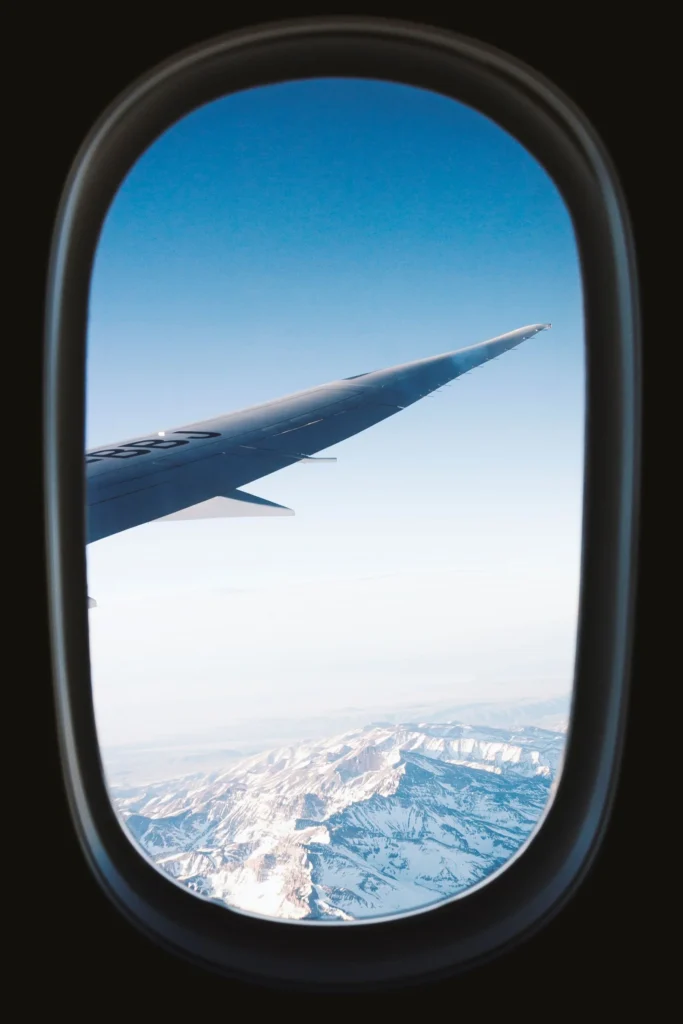
Skardu International Airport (IATA code KDU) sits about 9.2 km from the town centre. It was designated an international airport on 2 December 2021, but operations began under visual flight rules — pilots need to see the valley to land — and that single fact explains Skardu’s famous cancellations. PIA, Airblue and AirSial all fly the Islamabad–Skardu route, with a scheduled flight time of about 45–60 minutes. One-way fares run roughly PKR 15,000–35,000 depending on season and how early you book; confirm at booking, as fares are dynamic.
Three tactics that genuinely help:
- Take the morning flight. Morning departures have the best completion rate; the valley weather usually deteriorates later in the day.
- Book a changeable fare. The small premium over the cheapest ticket is worth it on this route.
- Never book a same-day international connection. Put at least one night — ideally your buffer day — between landing back in Islamabad and any flight you cannot afford to miss.
If your flight is cancelled: the playbook
Cancellations happen in every season, so decide your response before you need it:
- Rebook first, rearrange second. Get yourself on the next available flight at the airline desk before touching hotel or jeep bookings — seats on the next clear day go fast.
- Use the buffer day. This is what it is for. If you placed it at the end of the trip, a one-day slip costs you nothing but a quiet day in Skardu.
- If you must move, go by road the same day. A NATCO bus or coaster, or a private car via Besham and the Karakoram Highway, gets you out when the airport cannot. It is a long journey — see the road section — but it runs in almost all weather.
- Call your hotel and jeep driver the same morning. Skardu operators are used to weather reshuffles; bookings usually shift by a day without penalty if you tell them early rather than simply not appearing.
By road: the honest drive times
Search for Skardu drive times and you will find 613 km, 650 km and 740 km all printed as “the” distance from Islamabad — with no explanation. Here is the explanation: they are three different routes, and one of the numbers comes from a routing engine that has never driven the Jaglot–Skardu Road. Use this table to plan, and treat any single “Skardu is X hours away” claim with suspicion.
| Route | Distance | Driving time | Open |
|---|---|---|---|
| Islamabad → Naran → Babusar Top → Chilas → Jaglot → Skardu | ~650 km | ~14–16 hrs over two days | Mid-June to mid-October only |
| Islamabad → Besham → Dasu → Chilas → Jaglot → Skardu (Karakoram Highway) | ~740 km | ~18–21 hrs over two days | Year-round |
| Gilgit → Jaglot → Skardu (Strategic Highway S-1) | ~200 km total | 4–6 hrs by car | Year-round, brief landslide closures |
The final leg is shared by every route: from Alam Bridge near Jaglot, the Jaglot–Skardu Road (Strategic Highway S-1) runs about 167 km along the Indus to Skardu. The Frontier Works Organization widened it between 2017 and 2021, which cut the Gilgit–Skardu drive from around 10 hours to 4–6 hours by private car. One warning that matters: routing apps quote Gilgit–Skardu at around 2 hours 30 minutes. That figure is routing-engine optimism — nobody drives it in that time, and planning around it will break your day.
Two more road realities. The Babusar route is seasonal, open roughly mid-June to mid-October; as this guide is published in late November 2026 it is shut for the season — see Babusar Top closed for winter. Outside that window the Besham route is the only road in, and it carries its own delays around the Dasu dam construction. And whichever route you choose, break the journey overnight — Chilas or Besham are the natural stops — and never drive the mountain sections at night. Check the road status page before you set off, every time.
By bus
NATCO runs buses and coasters between Rawalpindi/Islamabad and Skardu. Expect about 20–24 hours and a fare of roughly PKR 3,000–6,000 — confirm the current fare and departure when you book. It is the cheapest way in and the slowest; the flight-cancellation playbook above is the other time it earns its keep.
Do you need a 4×4?
For Skardu town, the Kachura lakes, Shigar and Khaplu, the roads are paved and an ordinary sedan with a driver is fine. You need a 4×4 jeep for Deosai, Basho Valley and Soq Valley, where the tracks are unpaved and steep. The practical pattern most visitors use: a sedan for the valley days, a jeep hired by the day for the off-road days.
Getting around: Skardu’s four zones
Skardu’s sights fall into four zones, and the single most useful planning rule is one zone per day — the distances look small on a map and are not small on mountain roads.
| Zone | Main sights | Distance from town | Time |
|---|---|---|---|
| Town & near | Kharpocho Fort, Manthal Buddha Rock, Katpana Cold Desert, bazaar | 4–10 km | Half day, easy walking pace |
| West — Kachura | Satpara Lake, Lower Kachura (Shangrila) Lake, Upper Kachura Lake, Soq Valley | ~9–32 km | Full day |
| North — Shigar | Shigar Fort, Shigar Valley, Manthokha Waterfall (on the Khaplu road) | ~30–35 km | Full day |
| East — Khaplu | Khaplu Palace, Chaqchan Mosque | 103 km | Full day (3–4 hrs each way) |
| South — Deosai | Deosai National Park, Sheosar Lake, Bara Pani | Entrance ~41 km | Full day by jeep, season only |
A note on Satpara Lake: sources quote anything from about 10 km to 18 km from town depending on which shore and which road they measure. Plan on about 10 km and 20–30 minutes’ drive, and do not worry about the variance — it is a short hop either way.
Which places should you visit in Skardu?
Kharpocho Fort. The “King of Forts”, built in the late 16th century by Raja Ali Sher Khan Anchan on the rock above town. It is a short climb of about 4 km from the centre and the classic Skardu sunset viewpoint, looking down over the town and the Indus. Allow 1–2 hours, late afternoon for the light.
Manthal Buddha Rock. An 8th-century carving of the Buddha with bodhisattvas, about 8 km from town on the Satpara road. Fifteen minutes here connects Skardu to a much older Silk Road world. Combine it with Satpara Lake.
Satpara Lake. A clear mountain lake about 10 km from town, on the way toward Deosai. Best as a calm first-day stop while you acclimatise.
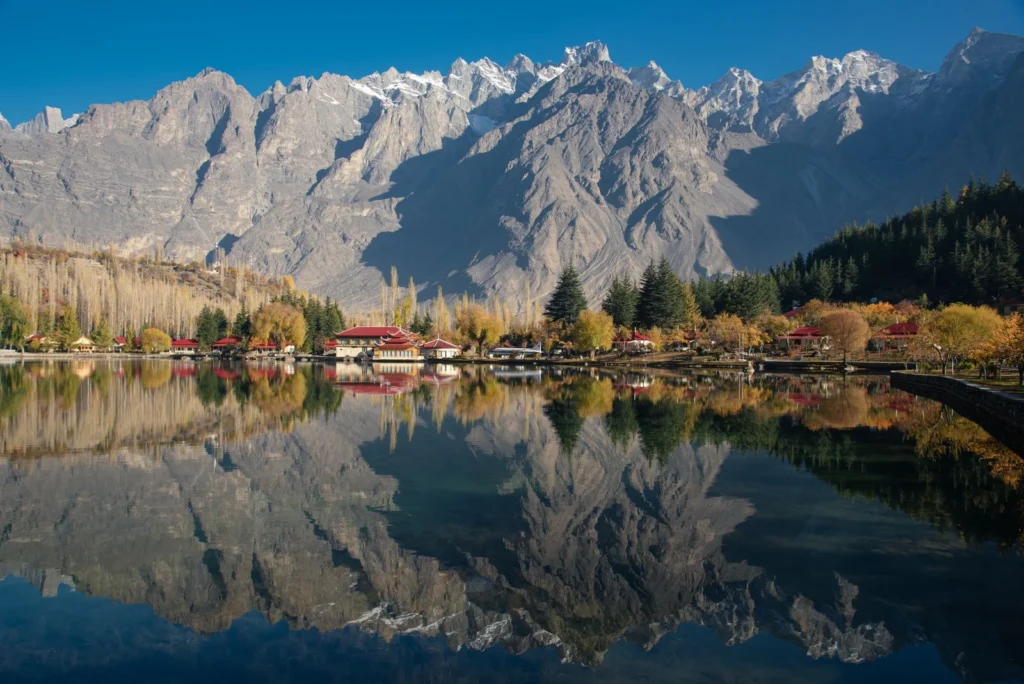
Lower Kachura Lake (Shangrila Lake) and Upper Kachura Lake. The famous pair, roughly 23–32 km west of town (40–60 minutes). Lower Kachura is the Shangrila Resort lake of a thousand postcards; Upper Kachura, a little further, is quieter and more local, with village life around its shore. Give the pair a full unhurried day rather than a photo stop.
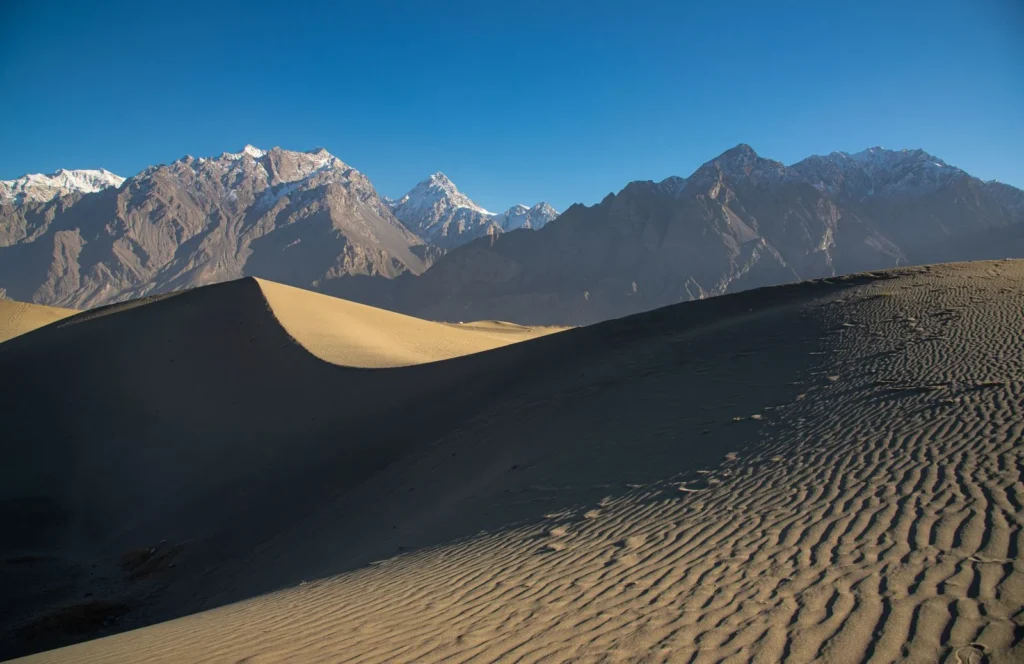
Katpana Cold Desert and Sarfaranga Cold Desert. High-altitude sand deserts about 10 km from town, where dunes sit within sight of snow peaks. Katpana’s flat walking makes it the easiest outing in this guide for children and older travellers. Go early or late for the light and the temperature.
Shigar Fort (Fong-Khar). The 17th-century palace of the Amacha dynasty rajas, about an hour north of Skardu, restored by the Aga Khan Cultural Service and now run as a heritage hotel and museum. Even if you are not staying, the building and its museum are worth the trip.
Khaplu Palace and Chaqchan Mosque. Khaplu, 103 km east, is a full day out: the palace built in 1840, and the Chaqchan Mosque dated to 1370, one of the oldest mosques in the region. Manthokha Waterfall is on this road and makes a natural stop.
Deosai National Park and Sheosar Lake. The plateau itself: an average elevation of about 4,114 metres, protected since 1993 for the Himalayan brown bear — whose numbers have recovered from around 19 in 1993 to about 78 by 2022. Sheosar Lake, at about 4,142 metres and roughly 2.3 km long, is the usual high point of the day, with Nanga Parbat visible from its shore on clear days — the same mountain you can walk to the foot of on the Fairy Meadows trek, on its other side. The plateau road opens around mid-June and the reliable season runs to the end of September.
One change every traveller now needs to know: camping inside Deosai National Park was banned after a brown-bear attack in September 2025 (reported by Dawn in December 2025). Plan Deosai as a day trip from Skardu, or as a through-drive to Astore with lodging outside the park — not as a camping trip, whatever older guides and tour pages still tell you.
Extensions if you have the days: Soq Valley and Basho Valley (jeep tracks, meadows and streams, quieter than the headline sights) and Manthokha Waterfall if you are not already passing it on the Khaplu day.
How many days do you need? A Skardu travel guide plan for 5–7 days
Five days is the honest minimum; seven is comfortable. The order below is deliberate — it is built around acclimatisation, keeping the low days first and Deosai on day 3 or later, once you have had your 24–48 hours at town altitude.
- Day 1 — Arrive and settle (low). Fly in or arrive by road. Katpana Cold Desert and the bazaar at an easy pace. Early night.
- Day 2 — Town and lakes (low). Manthal Buddha Rock, Satpara Lake, then Kharpocho Fort for sunset.
- Day 3 — Kachura (low–moderate). Lower and Upper Kachura lakes, Soq Valley if the group has energy.
- Day 4 — Deosai (high — the altitude day). Full jeep day: Deosai plateau, Bara Pani, Sheosar Lake. Only in season, only after the days above, and off the plateau by late afternoon.
- Day 5 — Shigar. Shigar Fort and the valley; Manthokha Waterfall on the way back if time allows.
- Day 6 — Khaplu (or buffer). The Khaplu day trip — or, if the trip has already been reshaped by weather, this becomes your spare day.
- Day 7 — Buffer and depart. The buffer day, spent on anything missed, then out — by air or the first road leg.
Short on time? A 3-day version (town + Kachura + one of Shigar or Deosai) is possible but leaves no buffer, and on this route no buffer is a genuine risk, not a saving. A full day-by-day version of this plan, with timings and booking order, is in our dedicated Skardu itinerary post.
Where should you stay in Skardu?
Stay in one of three areas. Skardu town is the practical base — widest choice, easiest jeeps and food, best if you are road-tripping or on a budget. The Kachura road puts you between town and the lakes, quieter and greener. Lakeside resorts at Lower Kachura are the splurge, waking up on the Shangrila shore.
By tier, expect roughly: budget guesthouses PKR 3,000–6,000 a night; mid-range hotels PKR 8,000–18,000; luxury resorts PKR 25,000–60,000 and above. Confirm current rates when you book — and book ahead for July to September, when the good rooms in every tier go first.
What does a Skardu trip cost?
These are 2026 planning ranges drawn from current operator and guide pricing — confirm locally before you commit, and expect the top end in the July–August peak.
| Item | Range (PKR) |
|---|---|
| Islamabad–Skardu flight, one way | 15,000–35,000 |
| NATCO bus, one way | 3,000–6,000 |
| Budget guesthouse, per night | 3,000–6,000 |
| Mid-range hotel, per night | 8,000–18,000 |
| Luxury resort, per night | 25,000–60,000+ |
| 4×4 jeep with driver, per day | 8,000–15,000 |
| Sedan with driver, per day | 6,000–10,000 |
| Mid-range meal | 800–2,000 |
| Deosai entry | ~500 (Pakistani visitors) / ~USD 40 (foreign visitors) |
When you hire a jeep by the day, settle four things before you set off: whether fuel is included, how waiting time is treated, whether the rate changes for a multi-day hire, and what happens if a road closure shortens the day. Five minutes of questions at the start prevents the only argument this trip regularly produces. For the full line-by-line breakdown of what a northern trip adds up to, see our Northern Pakistan trip cost guide. To turn these ranges into a budget for your own dates and group size, use the free Trip Planner on our Plan Your Trip page.
What should you eat, and what should you know about Balti culture?
Eat the Balti dishes while you are here: mamtu (steamed dumplings), balay (a hearty noodle soup), salted butter tea, fresh river trout, and apricots in every form — fresh in summer, dried year-round, and apricot oil and kernels as the souvenirs worth carrying home, along with pattu woollens and Balti jewellery from the bazaar. Travelling on to Hunza afterwards? Its table is different again — see our guide to Hunza Valley food.
Baltistan is majority Shia Muslim with Noorbakshia heritage, and a few courtesies go a long way: dress modestly, especially away from the main tourist stops; ask before photographing people; and know that some businesses close and towns quieten during Muharram observances. Balti is the native language; Urdu is understood everywhere and English widely in tourist areas, so communication is rarely a problem.
Is your Skardu plan actually ready? A quick verification
Run down this list before you book anything non-refundable:
- Route in chosen — and a fallback route named if the first one fails
- Buffer day placed at the end of the trip, before onward connections
- Road status checked (and a diary note to check again 48 hours before, and on the morning)
- Deosai day falls inside mid-June to end-September, if Deosai is in the plan
- Deosai placed on day 3 or later, after 24–48 hours at town altitude
- Jeep days and sedan days matched to the right vehicle for each zone
- Cash carried for the days ATMs and cards cannot be relied on
- SCOM SIM and offline maps sorted before leaving town
Common problems — and how to fix them
Your flight is cancelled on the morning. The most common Skardu problem of all. Follow the playbook above: rebook at the desk first, spend the buffer day, and only take the road if you truly must move that day.
The Skardu road (S-1) is closed by a landslide. It happens in every season and usually clears in a day or two. Do not attempt to cross on foot or by local lifts around the slide. Wait it out where you are — Gilgit side or Skardu side — and re-check the road status page rather than relying on bazaar rumour.
Deosai is still snowbound on your dates. If you are travelling near the season edges, the plateau may simply not be open. Swap the day for Basho Valley or a second Kachura day, and treat Deosai as the reason to come back in September.
A headache and breathlessness on the plateau. Classic mild altitude symptoms from climbing too high too fast. Descend — the cure is the drive back down — rest, hydrate, and do not push on to Sheosar hoping it passes. It is the reason this guide puts Deosai on day 4, not day 1.
The ATM is empty and there is no signal. Both happen. The fix is upstream: cash carried from Islamabad or Gilgit, an SCOM SIM bought in town, and offline maps downloaded before you leave. On Deosai there is no signal for anyone — tell your family the day is an offline day.
Every hotel is full in peak season. July and August in Skardu reward early booking. If you arrive full-season without a room, try the Kachura road guesthouses before the lakeside resorts, and ask your jeep driver — local drivers usually know which places have a room before any website does.
You booked a sedan for a jeep track. Deosai, Basho and Soq need a 4×4. Swap the vehicle for that day rather than letting a driver attempt it in a car; the per-day jeep range in the cost table is the price of not getting stuck at 4,000 metres.
Tips and variations
- Aim for September if your dates are flexible: open roads, clear skies, Deosai still in season, thinner crowds, easing prices — the best version of this trip.
- Combining Skardu with Hunza: the two pair naturally via Gilgit — roughly 300 km between Karimabad and Skardu, with the 4–6 hour Gilgit–Skardu leg on the S-1 as the link. Give the combination ten days or more; rushing both valleys short-changes each.
- With children or older travellers: build the trip on the low days — Katpana’s flat desert walk, the Kachura lakes, Shigar Fort — and treat Deosai as an optional extra only for those who are acclimatised and comfortable with a long jeep day.
- For photographers: the money light is early morning on the lakes and the last hour at Kharpocho Fort; Deosai’s scale needs the mid-morning clarity before afternoon cloud builds on the plateau.
Ready to turn this guide into your own trip? Plan your Skardu trip with our free Trip Planner →
Frequently asked questions
How many days are enough for a Skardu trip?
Five days is the minimum that works, and seven is comfortable. You need the low days first for altitude, a full day each for Kachura, Shigar and Deosai, and one buffer day at the end because Skardu’s flights cancel in every season. A 3-day trip is possible but leaves no slack for weather.
Is Skardu safe for tourists?
Skardu is one of Pakistan’s most-visited mountain towns and is generally considered safe for tourists, including families and solo travellers. The real risks are practical, not personal: weather-cancelled flights, landslide closures on the Skardu road, and altitude on Deosai. Plan for those three and the trip is straightforward.
Which month is best for Skardu?
September. The roads are open, the skies are at their clearest, Deosai is still in season, the peak crowds have gone and prices ease. May to October is the main season overall; April is the month for blossom.
Can you see K2 from Skardu?
No — K2 is not visible from Skardu town. Seeing it requires the multi-day Baltoro Glacier trek toward Concordia, which stages from Skardu with proper permits and preparation. What you can see from Sheosar Lake in Deosai, on a clear day, is Nanga Parbat.
Do foreigners need a permit for Skardu?
No. Foreign visitors need only a valid Pakistan visa for Skardu, Shigar, Khaplu and Deosai. Permits apply only to restricted-zone trekking and mountaineering and are issued by the Ministry of Tourism in Islamabad.
Is a 4×4 mandatory for Skardu?
No. Town, the Kachura lakes, Shigar and Khaplu are all on paved roads a sedan can handle. A 4×4 jeep is needed only for Deosai, Basho Valley and Soq Valley. Most visitors mix the two — sedan for valley days, jeep hired by the day for the off-road days.
Summary checklist
- Fly (~1 hour, morning flight, changeable fare) or drive two days — with the other option as your fallback
- Check road status 48 hours before and on the morning of travel
- Base in town, the Kachura road or lakeside, in that order of practicality
- Order the days low to high: town and lakes first, Deosai on day 3 or later
- One zone per day; Khaplu is a full day at 103 km each way
- Budget from the cost table, in cash-friendly rupees, peak season at the top end
- SCOM SIM, offline maps, power bank, layers — packed before you leave town
- Buffer day last, before any connection you cannot miss
Last updated: 27 November 2026
Sources & further reading
- National Highway Authority — road network and highway information: https://www.nha.gov.pk/
- Pakistan Meteorological Department — weather forecasts for Gilgit-Baltistan: https://www.pmd.gov.pk/
- Gilgit-Baltistan Tourism Department — official visitor information, including Deosai season announcements: https://visitgilgitbaltistan.gov.pk/
- Skardu International Airport — airport history and elevation reference: https://en.wikipedia.org/wiki/Skardu_International_Airport
About the author — Sarmad Ahmad
Sarmad Ahmad is the author behind Pakistan Destinations, writing travel guides, routes and road updates for travellers across Pakistan.